Selecting Rock Drill Bits for Hard Rock Versus Soft Formation Drilling
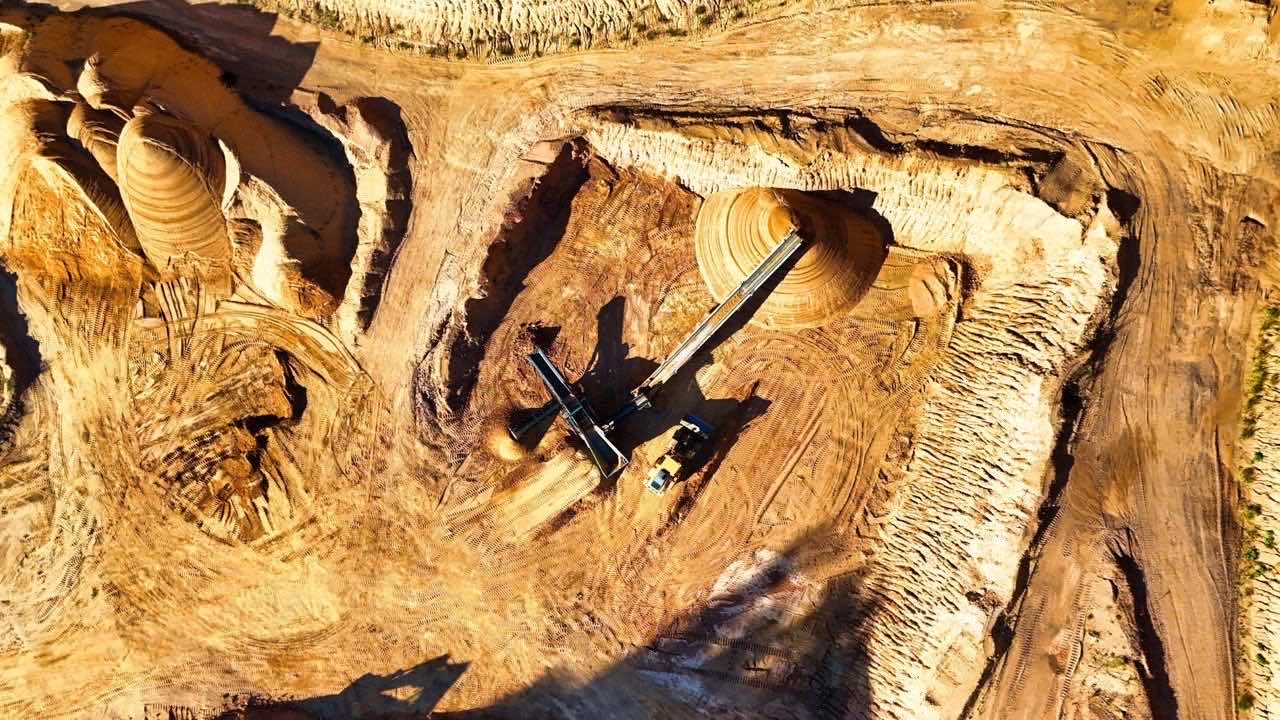
The same drill bit that works efficiently in granite will underperform in limestone, and the bit optimized for soft shale will wear out in hours if you run it into hard quartzite. Formation hardness is the primary variable in drill bit selection, but it interacts with other factors — abrasiveness, fracturing, moisture content — in ways that make matching bit spec to formation more nuanced than a single number on a hardness scale.
How formation hardness changes what the bit needs to do
In soft to medium formations (compressive strength below roughly 100 MPa — coal measures, chalk, soft limestone, mudstone), the cutting mechanism relies primarily on chip formation. The bit buttons penetrate the rock surface, and the material fails in tension as the button advances. This is relatively efficient: the energy goes into breaking rock, not just compressing it.
In hard rock (compressive strength above 150 MPa — granite, quartzite, hard basalt), chip formation gives way to a more complex cycle of micro-cracking, crushing, and eventual fragmentation. The bit is doing more work per volume of rock removed. Button protrusion, carbide grade, and rotation speed all need to be calibrated for these higher-energy conditions.
The range between 100–150 MPa is where bit selection decisions are least clear-cut and where formation-specific testing data is most valuable.
Button type and carbide grade for hard rock
Hard rock drilling favors buttons with lower cobalt content in the carbide binder — harder, more wear-resistant carbide that maintains button geometry under the high contact stresses of hard rock penetration. A carbide grade with 6–8% cobalt binder is typical for hard formation applications.
Button shape in hard rock drilling is typically hemispherical or slightly ballistic. The rounded geometry distributes the contact stress across the button face rather than concentrating it at a point, which reduces the risk of button fracture under the high compressive loads of hard formation work.
Softer formations use a different balance. Higher cobalt content (10–14%) in the binder gives tougher carbide that handles the irregular contact loads of softer, more variable formations. Button profiles tend toward more aggressive shapes — conical or chisel — that cut efficiently without requiring the crushing action necessary in hard rock.
Button protrusion: more in soft, less in hard
Button protrusion is the distance the carbide button extends beyond the face of the bit body. Higher protrusion means each button penetrates further into the formation per revolution, which improves penetration rate in soft rock where the formation yields easily.
In hard rock, high button protrusion creates excessive leverage on the button at the base of the protrusion, which is where buttons typically fracture. Reducing protrusion in hard rock keeps the stress on the carbide within its fracture tolerance while still achieving adequate penetration.
A common mistake when a soft-formation bit is run into harder-than-expected ground is button fracture at the base — not because the carbide was poor, but because the protrusion geometry wasn’t designed for the loads that formation produces.
Flushing requirements differ by formation
Efficient chip evacuation is important in all rock drilling, but the flushing volume and velocity required depend on formation type and cuttings characteristics.
Soft formations produce larger, more coherent cuttings that need higher flushing velocity to move up the borehole. Hard formations produce smaller, denser cuttings that are easier to flush but may pack more densely at the bit face if flushing is inadequate.
For rock drill bits used in underground applications where air flushing is standard, the number and position of the flushing ports in the bit body determine how effectively the air stream reaches the cutting face. Bits designed for soft formation often have fewer, larger ports; hard-formation bits may use more ports at specific angles to ensure flushing reaches between the gauge buttons where cuttings tend to accumulate.
Impact energy and rotation speed by formation
Percussive drilling in hard rock uses higher impact energy and lower rotation speed than in soft formations. The logic: each piston blow needs to generate enough energy to initiate fractures in the hard material, and the rotation between blows needs to be small enough that each new blow hits fresh material rather than landing on an already-worked area.
In soft formations, rotation speed can be higher because the material yields more readily and less energy per blow is needed. Higher rotation with moderate impact gives good penetration rates in soft rock without excessive bit wear.
Running a hard-formation bit spec at soft-formation drilling parameters — high rotation, moderate impact — can actually underperform a soft-formation bit in the same conditions because the hard-formation button geometry isn’t optimized for high-rotation chip formation.
Reading bit wear to confirm formation match
After a drilling run, inspect the bit buttons for wear pattern:
Even wear across all buttons, with gradual reduction in protrusion height: the bit is matched to the formation. This is expected consumption.
Fractures at the base of buttons: formation is harder than the bit was designed for. Reduce protrusion or switch to a harder carbide grade.
Flat wear on button tips without significant height reduction: formation is softer than the bit was designed for. The buttons aren’t penetrating efficiently; a more aggressive button profile or higher protrusion would improve penetration rate.
Gauge button wear significantly faster than face buttons: the borehole wall is more abrasive than the face material — common in formations with an abrasive mineral band at the borehole wall. A harder carbide grade for gauge buttons specifically, or a stepped gauge button design, addresses this.